S. Korea Football Crisis: The Fight for 'Gongjeong'
Why did South Korea explode over a football manager? Explore how the KFA's recent scandal exposes a deep-rooted battle between transparent meritocracy and the archaic culture of 'Inmaek' (connections).

A Nation Furious Over a Game
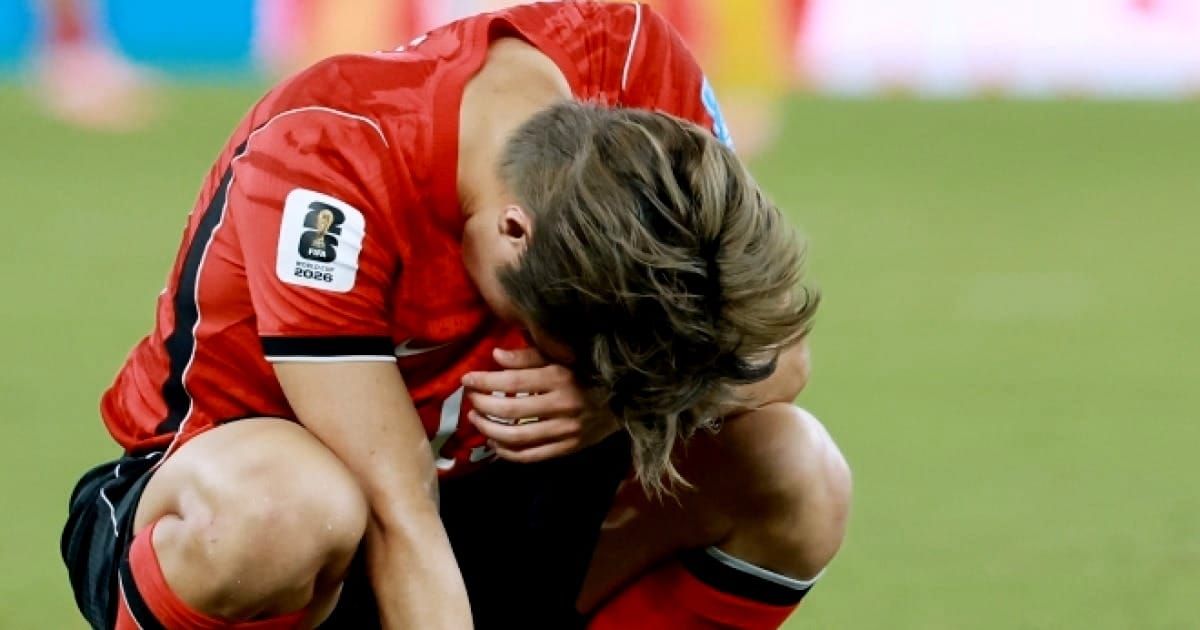
When South Korea’s national football team failed to advance to the Round of 32 in the recent World Cup, the reaction in Seoul was not mere disappointment. It was an eruption.
Across the globe, passionate football fans mourn early tournament exits. However, the current atmosphere in South Korea transcends typical sports fandom grief. Citizens are organizing petitions, launching protests, and demanding government audits into the Korea Football Association (KFA) and its manager, Hong Myung-bo. To an outsider, treating a football defeat as a national political scandal might seem like an overreaction.
But to understand South Korea, you must understand that this outrage is no longer about football. It is a visceral reaction to the violation of the single most sacred value for modern South Koreans: Fairness, or Gongjeong (공정).
Opaque Process in a Transparent World
The seed of the current crisis was planted long before the World Cup began, specifically during the hiring process of Manager Hong Myung-bo.
In the eyes of the South Korean public, the KFA bypassed standard, transparent protocols. While foreign managerial candidates were reportedly subjected to rigorous interviews and presentations, Hong—a prominent figure from the domestic football establishment—was allegedly handed the position behind closed doors, without the same level of scrutiny.
This sparked immediate fury. Why? Because it sharply contrasted with the reality of the players on the pitch. South Korea’s squad boasts world-class talents like Son Heung-min, Kim Min-jae, and Lee Kang-in. These athletes reached the pinnacle of global football (the Premier League, Bundesliga, and Ligue 1) through pure, undeniable merit. They survived the ultimate free market of talent.
Yet, when they returned to play for their country, they were forced to operate under an archaic, opaque administration. The juxtaposition was glaring: Global Stars forced into a Tribal System.
The Battle of 'Spec' vs. 'Inmaek'
To fully grasp the depth of this anger, one must look at the everyday reality of South Korea's younger generations (those in their 20s and 30s).
South Korea is an ultra-competitive society. From a young age, students are pushed toward the Suneung (the grueling national college entrance exam), where a single point can determine their future. In the job market, young people spend years meticulously building their Spec (스펙)—a Konglish term for a portfolio of qualifications, including degrees, language scores, and internships—just to get a foot in the door of a major corporation.
In a society where competition is this fierce, young Koreans have accepted that the outcomes will be unequal. However, they demand that the process must be flawlessly fair. This procedural justice is what they call Gongjeong.
When the KFA appointed Hong Myung-bo through an opaque process, it hit a collective societal nerve. It reminded young Koreans of the most demoralizing aspect of their society: Inmaek (인맥), or personal networks. For the public, the KFA's decision was a painful confirmation that no matter how much Spec (merit) one has, it can still be entirely neutralized by the Inmaek (connections) of the older, established generation—often referred to as Kkondae (꼰대, meaning authoritarian older people).
- The Global Standard: Driven by Meritocracy, Data, and Transparent Competition.
- The Old Guard: Driven by Hierarchy, Inmaek, and Closed-door Decisions.
The football crisis is essentially a microcosm of South Korea’s broader generational and cultural war.
A Growing Pain for Global Standards
The fury directed at the KFA and Hong Myung-bo is not a temporary temper tantrum over a lost game. It is a loud, uncompromising demand from the South Korean public to dismantle the illusions of meritocracy and replace them with actual transparency.
As South Korean culture—from K-Pop to cinema, and now individual athletes—continues to set global standards, its domestic institutions are facing immense pressure to catch up. The current football scandal is a profound growing pain, proving that in modern South Korea, the rules of the game matter just as much as the final score.